
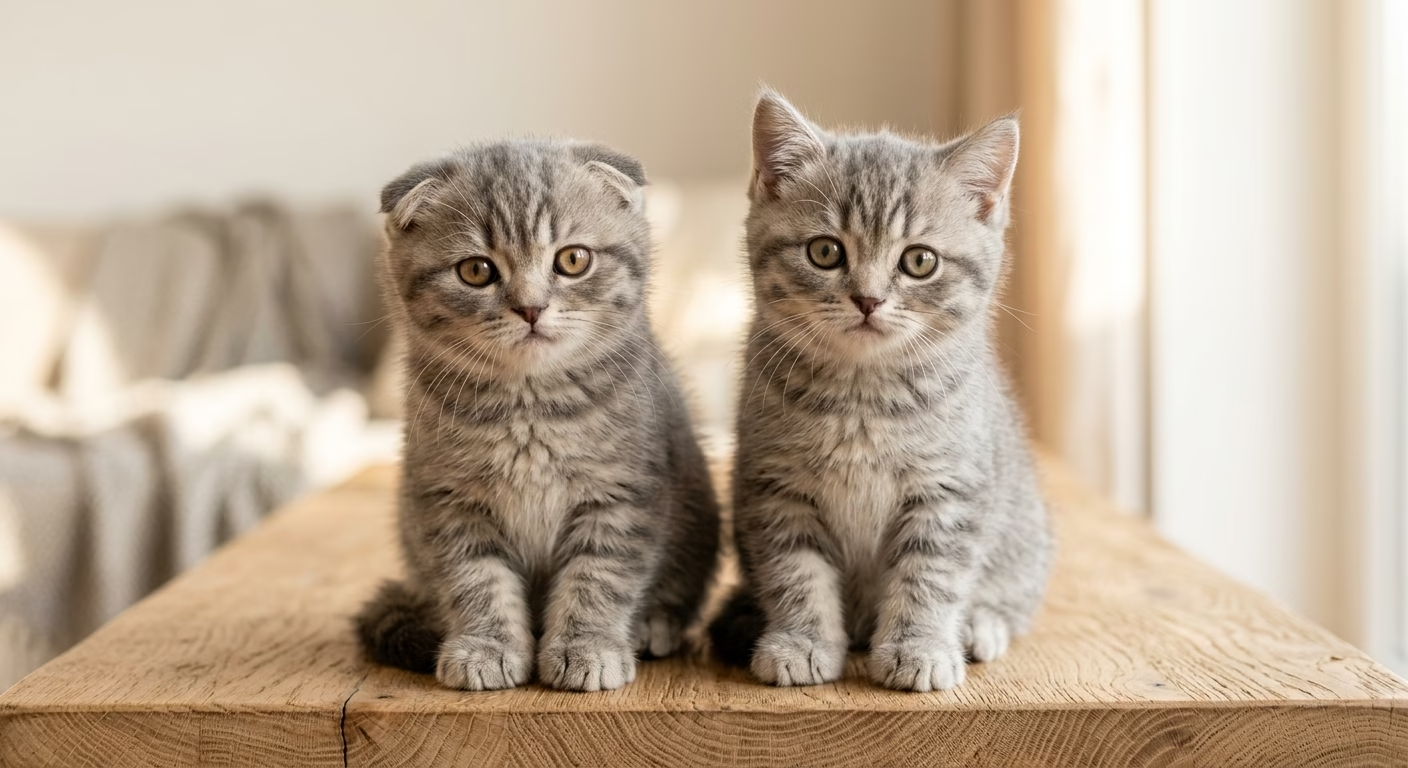
Scottish Fold and British Shorthair are two of the most searched purebred cats in the United States, and families often shortlist them together. They look similar, carry similar prices, and both show up on best breed for apartments lists. If you are deciding between the two, this guide gives you the full comparison; origins, temperament, health, care, lifespan, cost, and the honest trade offs that matter once a cat is living in your home.
Short answer: if you want a quiet, dignified, routine loving companion with a plush coat and no breed specific health risks, the British Shorthair is the safer, lower maintenance choice. If you want a softer, more sociable cat with the signature folded ear look and are prepared for careful, breeder informed health screening, the Scottish Fold is the one families fall in love with.
Scottish Fold vs British Shorthair at a glance
| Trait | Scottish Fold | British Shorthair |
|---|---|---|
| Origin | Scotland, 1961 (barn cat Susie) | Great Britain, Roman era, formalized 1870s |
| Weight | 6 to 13 pounds | 7 to 17 pounds |
| Lifespan | 11 to 14 years | 12 to 17 years |
| Coat | Dense, plush, short or long (longhair variant) | Dense, crisp teddy bear plush, short |
| Ear shape | Folded forward (single, double, or triple fold) | Small, rounded, upright |
| Temperament | Sweet, social, people oriented, calm | Reserved, independent, loyal, routine loving |
| Energy | Low to moderate | Low |
| Grooming | Weekly brushing (daily for longhair) | Weekly brushing |
| Health risks | Osteochondrodysplasia (ear fold gene related); screened in ethical breeding | HCM (cardiac); screened by DNA and echocardiogram in ethical breeding |
| Good with kids | Excellent | Very good (prefers calm handling) |
| Good with dogs | Yes, when introduced gradually | Yes, with calm, respectful dogs |
| Vocal | Soft, chirpy, occasional | Very quiet |
| Starting price (ethical breeder) | Around $2,000 | Around $2,000 |
Origins: closer cousins than they look
The British Shorthair is one of the oldest cat breeds in the Western world. Romans brought working cats to Britain, local populations hardened over centuries, and the breed was formalized in English cat shows in the 1870s. It is the model for the pedigree British tabby and the inspiration for the Cheshire Cat.
The Scottish Fold is much younger. The entire breed descends from a single white barn cat named Susie, born in Perthshire, Scotland in 1961, who carried a spontaneous genetic mutation that folded her ears forward. Scottish Folds were then crossed with British Shorthairs and American Shorthairs to establish the breed. That is why a Scottish Fold and a British Shorthair can look nearly identical from the shoulders down; they share recent ancestry.
Appearance: the ears are the headline, but the body matters too
Both breeds have a round, cobby body, dense double coat, and large round eyes set in a round head. Side by side, the clearest differences are the ears and the size.
The British Shorthair’s ears are small, rounded, and upright, set wide on a broad skull. The breed is heavier and more muscular, with males commonly reaching 14 to 17 pounds. The coat has a crisp teddy bear texture that resists lying flat; British Shorthair blues in particular are famous for looking like a plush toy.
The Scottish Fold’s trademark is of course the folded ears, which range from a single fold (ear tip bent forward) to a double or triple fold (ears pressed close to the skull). Folded ears are not present at birth; kittens are born with straight ears that begin to fold around three to four weeks. Scottish Folds come in two coat lengths; Shorthair and Longhair (sometimes called Highland Fold); and are generally a touch smaller and more compact than British Shorthairs.
Important point for buyers: not every Scottish Fold has folded ears. Breeding fold to fold is unsafe and ethical breeders pair a folded parent with a straight eared parent. About half of each litter inherits folded ears; the rest are called Scottish Straights. Scottish Straights are the same breed, equally sweet, and avoid the health risks associated with the fold gene entirely. If you love the Scottish Fold look but want zero health concern around the ear mutation, a Scottish Straight is an excellent answer.
Temperament: the biggest practical difference
This is where the two breeds diverge most. A British Shorthair is dignified. It will greet you, sit near you, and watch the household from a comfortable chair. It is not a lap cat for most of its day. It bonds deeply with its family but shows affection on its own schedule, with proximity rather than cuddling. British Shorthairs are famously undemanding; they tolerate being alone, do not vocalize much, and keep their composure in loud or busy homes.
A Scottish Fold is softer in every sense. Folds want to be where you are. They follow owners from room to room, sit on laps, sleep near heads, and chirp quietly for attention. They adapt quickly to new people, children, and other pets. They are also one of the breeds most reliably reported to sit in the famous Buddha pose with hind legs stretched out and front paws on the belly.
If you work from home or have children who want a cat that participates in the household, a Scottish Fold will be happier and so will you. If you travel for work, live alone, or want a cat that is a calm presence rather than a constant companion, the British Shorthair is the better match.
Health: both breeds need an ethical breeder, for different reasons
Both breeds have one well documented health risk, and both risks are managed through responsible breeding. This is where asking the right questions of the breeder matters more than the breed itself.
British Shorthair: hypertrophic cardiomyopathy (HCM) is the most common cardiac disease in cats, and the British Shorthair carries elevated genetic risk. Ethical breeding pairs are DNA tested for known HCM mutations and parents are screened by echocardiogram before being bred. At Luxury Only Kittens, every British Shorthair placement comes from screened lines with documentation shared before purchase. HCM in a screened line is not zero risk; no breed is; but it drops the lifetime likelihood of cardiac disease substantially.
Scottish Fold: the gene that folds the ears is a mild cartilage mutation that can also affect joints, a condition called osteochondrodysplasia. Severity ranges widely. Breeding fold to fold doubles the dose of the gene and produces kittens with painful joint changes; this is why no ethical breeder ever pairs two folded cats. A properly bred Scottish Fold from a fold to straight pairing has significantly reduced risk and a normal, comfortable life. Signs of joint discomfort, if they appear, usually show up by middle age and are manageable with weight control, joint supplements, and vet guided care.
Honest reality: the Scottish Fold ear mutation is a real medical consideration. If you are not comfortable with any level of breed related risk, choose a British Shorthair or a Scottish Straight. If you want the Scottish Fold look and are willing to work with a breeder who screens parents and places from fold to straight pairings, you can own a Fold confidently.
Lifestyle fit: which cat for which family
British Shorthair is the better fit if you:
- Want a quiet, independent companion who does not need constant attention
- Travel for work or spend long days away from home
- Live in a smaller apartment and want a calm, non vocal cat
- Prefer a cat that greets you but does not demand your lap
- Want a breed with no major breed specific genetic risks beyond HCM (which is screenable)
- Appreciate the plush toy look and don’t need the ear fold
Scottish Fold is the better fit if you:
- Want a cat that follows you from room to room
- Have children who want a sociable, patient family pet
- Work from home and want a companion through the day
- Love the folded ear look and are comfortable with a breeder who screens for joint health
- Already have other pets you want the new cat to integrate with easily
- Want a cat known for the Buddha pose and gentle chirping vocalization
Grooming and care: nearly identical
Both breeds have a dense double coat that sheds moderately year round and more heavily in spring and fall. A weekly brushing with a stainless steel comb keeps the coat healthy and reduces hairballs. A Scottish Fold Longhair needs daily brushing to prevent mats behind the ears and along the belly. Neither breed needs regular bathing.
Scottish Fold ears require slightly more attention than upright ears because the fold can trap wax and moisture. A quick weekly check with a cotton pad and vet approved ear cleaner is enough for most Folds and prevents the mild yeast overgrowth that occasionally occurs.
Both breeds are moderate shedders. If you are allergic to cats, be aware that neither is a hypoallergenic breed; the Russian Blue, Siberian, or Balinese are better choices for sensitive households.
Cost: around the same, with similar hidden expenses
At Luxury Only Kittens, both British Shorthair and Scottish Fold kittens are placed from screened lines with prices typically starting around $2,000. Pricing reflects coat color, lineage, availability, and whether the kitten is placed as pet quality or breeding quality. Rare British Shorthair colors (lilac, chocolate, cinnamon) and show line Folds with distinctive fold tightness often start higher.
Beyond the purchase price, the first year cost of either breed looks similar: around $500 to $1,000 in supplies, routine vet care, and quality food. Pet insurance is strongly recommended for both and runs about $25 to $50 per month, depending on coverage level and the kitten’s age at enrollment.
Which breed wins?
Neither does, which is why both have been among the most popular pedigree breeds in the United States for the last decade. The question is which cat fits the life you actually live.
If you want the easiest to live with cat and the lowest baseline health concern, choose the British Shorthair. If you want the warmest, most sociable, most small child of a cat and are ready to work with a careful breeder on health, choose the Scottish Fold; or ask about a Scottish Straight to get the same temperament without the fold mutation.
Luxury Only Kittens places both breeds nationwide with full health certification, documented lineage, and personal delivery. Browse available British Shorthair kittens and Scottish Fold kittens currently in our litters, or see all available kittens ready for placement.
Frequently asked questions
Are Scottish Folds and British Shorthairs related?
Yes. The Scottish Fold breed was established in the 1960s by crossing the original folded ear Scottish barn cat Susie with British Shorthairs and American Shorthairs. Modern Scottish Folds still carry significant British Shorthair ancestry, which is why the two breeds share a round body shape, dense double coat, and gentle temperament.
Which breed is better for families with young children?
Scottish Folds are generally more patient with children because they are highly social and tolerant of handling. British Shorthairs do well with respectful children but prefer calm interaction and are less likely to seek out play with kids. Either breed can live happily in a household with children when the children are taught gentle handling.
Do Scottish Folds have health problems?
The gene that creates folded ears can affect cartilage elsewhere in the body, a condition called osteochondrodysplasia. Severity varies. Ethical breeders only pair a folded parent with a straight eared parent, which reduces the risk substantially. Scottish Straights (littermates with straight ears) are not affected at all. A properly bred Scottish Fold from a reputable breeder typically has a comfortable, normal life.
Do British Shorthairs have health problems?
The British Shorthair’s main breed specific concern is hypertrophic cardiomyopathy (HCM), a cardiac disease that is managed through DNA testing and echocardiogram screening of breeding cats. Buying from a breeder who tests parents substantially reduces risk. Beyond HCM, British Shorthairs are generally a healthy, robust breed.
Which breed is quieter?
The British Shorthair is one of the quietest cat breeds. Scottish Folds are also quiet but more vocal than British Shorthairs; they are known for soft, high pitched chirps when they want attention. If silence matters, choose the British Shorthair.
Which breed is better for apartments?
Both are excellent apartment cats. They are low energy, do not require outdoor access, and tolerate smaller spaces well. The British Shorthair has a slight edge because it is quieter and more independent, which matters in a building with thin walls.
How much does a Scottish Fold or British Shorthair cost?
At Luxury Only Kittens, both breeds are placed from screened lines with prices typically starting around $2,000. Final price depends on color, lineage, and whether the kitten is pet quality or breeding quality. Rare colors and show line kittens are placed at the higher end of the range.
Can a Scottish Fold and a British Shorthair live together?
Yes, and the pairing often works beautifully. Both breeds are calm, low energy, and non territorial. The Scottish Fold’s sociability can help pull a reserved British Shorthair out of its shell, and the British Shorthair’s steadiness anchors the household. Introduce them gradually, as with any two cats, and expect a settled friendship within a few weeks.