
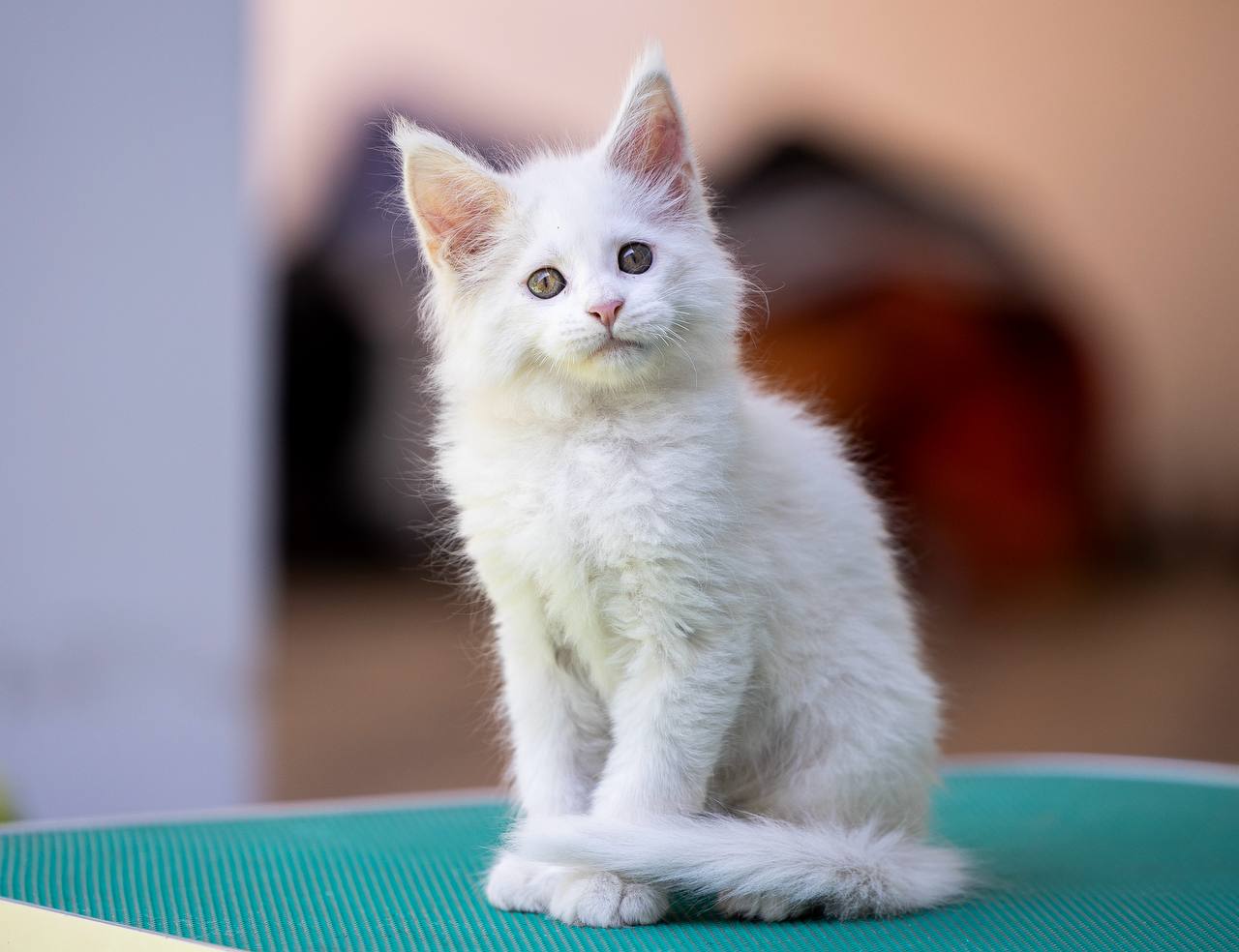
If you are deciding between a Ragdoll and a Maine Coon, you are choosing between two of the most popular, most photogenic, and most beloved cat breeds in the world. They look superficially similar; large, fluffy, calm, slow-moving giants that love people. Underneath, they are very different cats, with different origins, different temperaments, different grooming demands, and different right-fit households.
This guide compares the two breeds side by side on every point that matters when you are picking the right cat for your home.
Ragdoll vs Maine Coon at a glance
| Trait | Ragdoll | Maine Coon |
|---|---|---|
| Adult weight (male) | 15 to 20 lb | 18 to 25 lb (some larger) |
| Adult weight (female) | 10 to 15 lb | 12 to 18 lb |
| Length (nose to tail tip) | 36 to 40 in | 38 to 48 in (world record 48.5 in) |
| Eye color | Always blue | Green, gold, copper (blue only in white cats) |
| Coat type | Silky, single coat, minimal undercoat | Shaggy double coat with heavy undercoat |
| Grooming needs | 2 to 3 times a week | 3 to 4 times a week; daily in shed season |
| Temperament | Floppy, docile, lap cat, follows one person | Playful, active, dog-like, bonds with the family |
| Vocalization | Quiet, soft chirps | Chirps, trills, chatters constantly |
| Energy level | Low to moderate | Moderate to high |
| Lifespan | 13 to 17 years | 12 to 15 years |
| Full physical maturity | 3 to 4 years | 4 to 5 years |
| Starting price (ethical breeder) | $2,000 and up | $2,000 and up |
Size: which one is bigger?
Maine Coon, in almost every case. The Maine Coon is one of the largest domestic cat breeds in the world, with males routinely reaching 18 to 25 pounds and some lines going higher. The current Guinness record for longest domestic cat is a Maine Coon at 48.5 inches nose to tail.
Ragdolls are large too, but a size tier smaller. A big male Ragdoll tops out around 20 pounds and 40 inches long. Female Ragdolls are noticeably smaller than female Maine Coons.
If “giant lap cat” is the dream, both qualify. If “the biggest cat in the room” is the dream, go Maine Coon.
Looks: how to tell them apart
Easy once you know what to look for.
Ragdoll: always blue eyes, pointed coloring (darker face, ears, legs, tail against a lighter body), silky single-layer coat, rounded features, almost no mane. The breed is essentially a colorpoint pattern on a large frame.
Maine Coon: green, gold, or copper eyes (blue only in white Maine Coons), lion-like ruff around the neck, pronounced ear tufts (lynx tips), long tufted toes, tufted ears, square muzzle, shaggy double coat. The silhouette reads “wild” where the Ragdoll reads “plush.”
If a cat has blue eyes and a pointed coat, it is a Ragdoll (or Ragdoll mix). If a cat has lynx-tipped ears, long neck ruff, and non-blue eyes, it is a Maine Coon.
Temperament: lap cat vs dog-cat
This is the biggest practical difference and the one most new owners wish they had understood sooner.
Ragdolls are lap cats, built for lap-cat life. The breed was literally selected for one trait: going completely limp and docile when picked up (hence “Ragdoll”). They follow one favorite person from room to room, settle into laps for hours, and tend to be quiet. Low prey drive. Low energy. They need company more than they need stimulation; a Ragdoll alone all day gets lonely.
Maine Coons are dog-cats. They play fetch. They walk on leashes. They greet you at the door. They chatter at birds. They open cupboards. They want to be in the middle of everything and they are smart enough to engineer that. Moderate to high energy. Multi-person bonding; the whole family gets a Maine Coon, not just the person who feeds them.
Both are famously good with children and other pets. Both are gentle. The difference is what they do with their day.
Grooming: single coat vs double coat
Both breeds are long-haired, both shed, both need brushing. Not equally.
Ragdoll: single coat, minimal undercoat, less prone to matting. Two to three brushings a week keeps the coat clean. Shedding is moderate and manageable.
Maine Coon: double coat with a dense undercoat, especially around the ruff, belly, and britches. Three to four brushings a week minimum. In spring shed season, daily brushing. Matting is a real risk if ignored, especially behind the ears and in the armpits. Many Maine Coon owners schedule a professional groom twice a year.
If grooming time is a hard constraint, Ragdoll wins. If you enjoy the ritual (or you are shopping for the full majestic look), Maine Coon rewards the effort.
Health: what to screen for
Both breeds share one major health concern: hypertrophic cardiomyopathy (HCM), the most common heart disease in cats. Both breeds also have breed-specific genetic markers associated with HCM.
- Maine Coons carry the MYBPC3 (A31P) mutation at a higher population rate. Reputable breeders DNA-test parents and only breed from clear or heterozygous cats, never from HCM-affected cats.
- Ragdolls carry a different MYBPC3 variant (R820W) associated with HCM. Same screening logic applies.
- Both breeds should have annual cardiac echo screening on breeding adults.
- Maine Coons additionally need screening for hip dysplasia and spinal muscular atrophy (SMA, specifically the LIX1 mutation).
- Ragdolls additionally need PKD (polycystic kidney disease) screening, though it is less common than in Persians.
Any ethical breeder of either breed shows you the parent cats’ HCM echo reports, DNA panel results, and veterinary pedigree records. If a breeder cannot produce these documents, walk away regardless of breed.
Which one is right for your home?
Short decision tree based on how most households actually use the cat.
Pick a Ragdoll if:
- You want a cat that will physically sit in your lap for hours.
- You spend significant time at home (Ragdolls get lonely when left alone all day).
- You prefer a quieter, less demanding presence.
- You want blue eyes and the classic “pointed” coloring.
- Grooming time is limited and you want manageable shedding.
- You have a smaller space; Ragdolls are large but less active.
Pick a Maine Coon if:
- You want a cat with huge personality and the physical size to match.
- You have an active household (kids, other pets, multiple adults coming and going).
- You want a cat that will play, train, walk on a leash, learn tricks.
- You enjoy grooming or do not mind scheduling it in.
- You have the space; Maine Coons need room to prowl and climb.
- You want “the biggest cat anyone you know owns.”
Browse our Ragdoll kittens guide or our Maine Coon breed page to see current litters.
Price: are they similar?
Yes, in the United States, roughly the same tier. Ethically bred, health-tested, well-socialized Ragdoll and Maine Coon kittens from reputable breeders both start around $2,000 and go up based on color, lineage, show pedigree, and breeder reputation. Rare colors (lilac Ragdoll, silver Maine Coon) command premiums. Championship-line kittens from top catteries can reach $4,000 to $6,000.
Prices below $1,500 for either breed should raise questions about health testing, pedigree, and weaning age (ethical breeders keep kittens with their mother for at least 12 weeks; most backyard sources release at 6 to 8 weeks, which produces behavioral problems that follow the cat for life).
Can they live together?
Yes, and they often do. A Ragdoll and a Maine Coon in the same household is one of the more common large-breed pairings; the temperaments actually complement each other. The Ragdoll’s calm anchors the household; the Maine Coon’s play drive keeps both cats engaged. Introduction follows the standard slow-introduction protocol for any two adult cats.
If you already own one of these breeds and are considering a second cat, the other breed is a defensible choice.
Looking for a Ragdoll or Maine Coon kitten?
Both breeds are flagships at Luxury Only Kittens, and both are placed only through catteries that follow full health-testing protocols (HCM echo, DNA panels including MYBPC3, hip screening for Maine Coons, PKD screening for Ragdolls) and keep kittens with their mother for at least 12 weeks. Browse our currently available kittens to see which Ragdolls and Maine Coons are ready for placement.
Frequently asked questions
Which is bigger, Ragdoll or Maine Coon?
Maine Coon, consistently. Adult male Maine Coons average 18 to 25 pounds; adult male Ragdolls average 15 to 20 pounds. Length and height favor Maine Coon by a similar margin.
Which is more affectionate?
Both are famously affectionate; the style is different. Ragdolls express affection through physical closeness (sitting on your lap, going limp in your arms, sleeping on you). Maine Coons express affection through participation (following you, chatting with you, playing with you). Which “feels more affectionate” depends on how you personally receive affection.
Do Maine Coons shed more than Ragdolls?
Yes, by a noticeable margin. Maine Coons have a dense double coat and shed heavily, especially in spring. Ragdolls have a single coat with minimal undercoat and shed moderately.
Which is better with children?
Both are excellent with children. If you have very young children who grab and squeeze, Ragdolls’ famous go-limp temperament makes them exceptionally tolerant. If you have older children who want a cat that plays, Maine Coons are more interactive.
Which is better for first-time cat owners?
Ragdoll, slightly. Lower energy, lower grooming demand, lower vocalization, and the “lap cat” temperament matches what most first-time owners picture when they picture a cat. Maine Coons are not hard to own, but their size, energy, and vocal personality can surprise someone expecting a quieter pet.
Can a Ragdoll live with a Maine Coon?
Yes. The pairing is common and the temperaments complement each other well. Standard slow-introduction protocol applies.
Which breed has fewer health problems?
Both breeds share HCM risk; both have breed-specific DNA screens that responsible breeders use. Maine Coons additionally need hip dysplasia and SMA screening. Ragdolls additionally need PKD screening. Overall health outcomes depend much more on the breeder’s screening protocol than on the breed itself. A health-tested kitten from either breed, properly weaned at 12+ weeks, typically lives a long healthy life.
Which lives longer?
Ragdolls typically live 13 to 17 years; Maine Coons typically live 12 to 15 years. The Ragdoll’s slight edge is partly because the breed carries fewer size-related health issues (very large cats of any breed have shorter lifespans on average).
Are Ragdolls or Maine Coons hypoallergenic?
Neither. “Hypoallergenic cat” is largely a myth; the allergen is a protein (Fel d 1) in saliva and dander, not fur itself. Both breeds produce Fel d 1 at normal levels. Some individual cats produce less than others; a visit to the cattery before placement is the only reliable way to test personal reaction.