
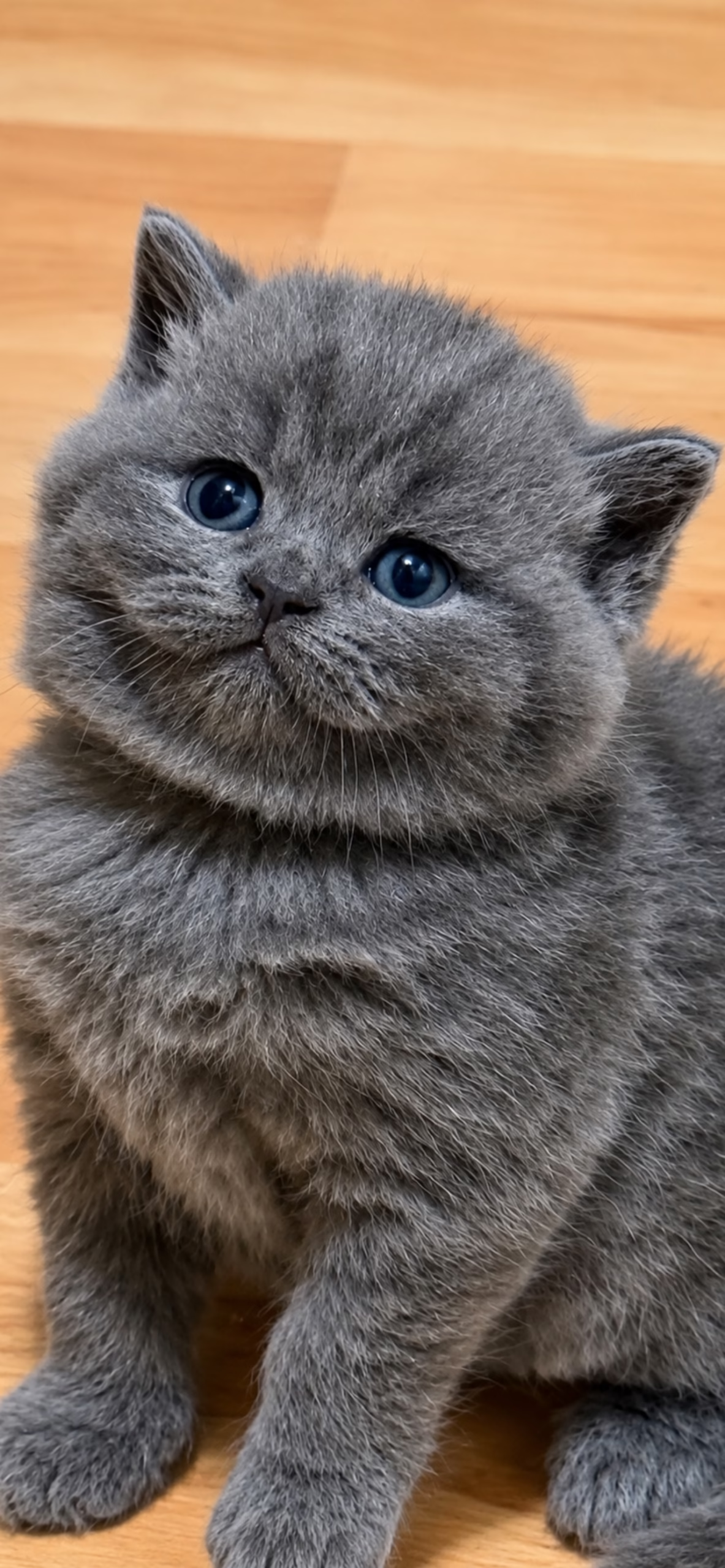
The British Shorthair (BSH) comes in more color and pattern combinations than almost any other pedigreed cat breed. TICA and CFA officially recognize over 300 color and pattern variants. This guide covers every major color family, what to look for, and how rarity affects both pricing and breeder waitlists.
If you are comparing BSH kittens or deciding on a color, this is the reference you want bookmarked.
Every photo in this guide is a British Shorthair kitten placed through Luxury Only Kittens, not stock photography.
The Six BSH Color Families
BSH colors group into six broad families. Every color in the breed sits inside one of these:
- Solid (a single uniform color)
- Tabby (patterned with stripes, spots, or swirls)
- Bicolor (color plus white)
- Colorpoint (Siamese-style points on ears, face, paws, tail)
- Tipped, Shaded, and Smoke (silver or golden undercoat with color at the tips)
- Tortoiseshell and Calico (patched or blended two-color)
Below is each family in detail.
1. Solid Colors
Solid BSH cats have a single uniform color across the entire coat. Eye color is usually copper or gold.
Blue (the classic)
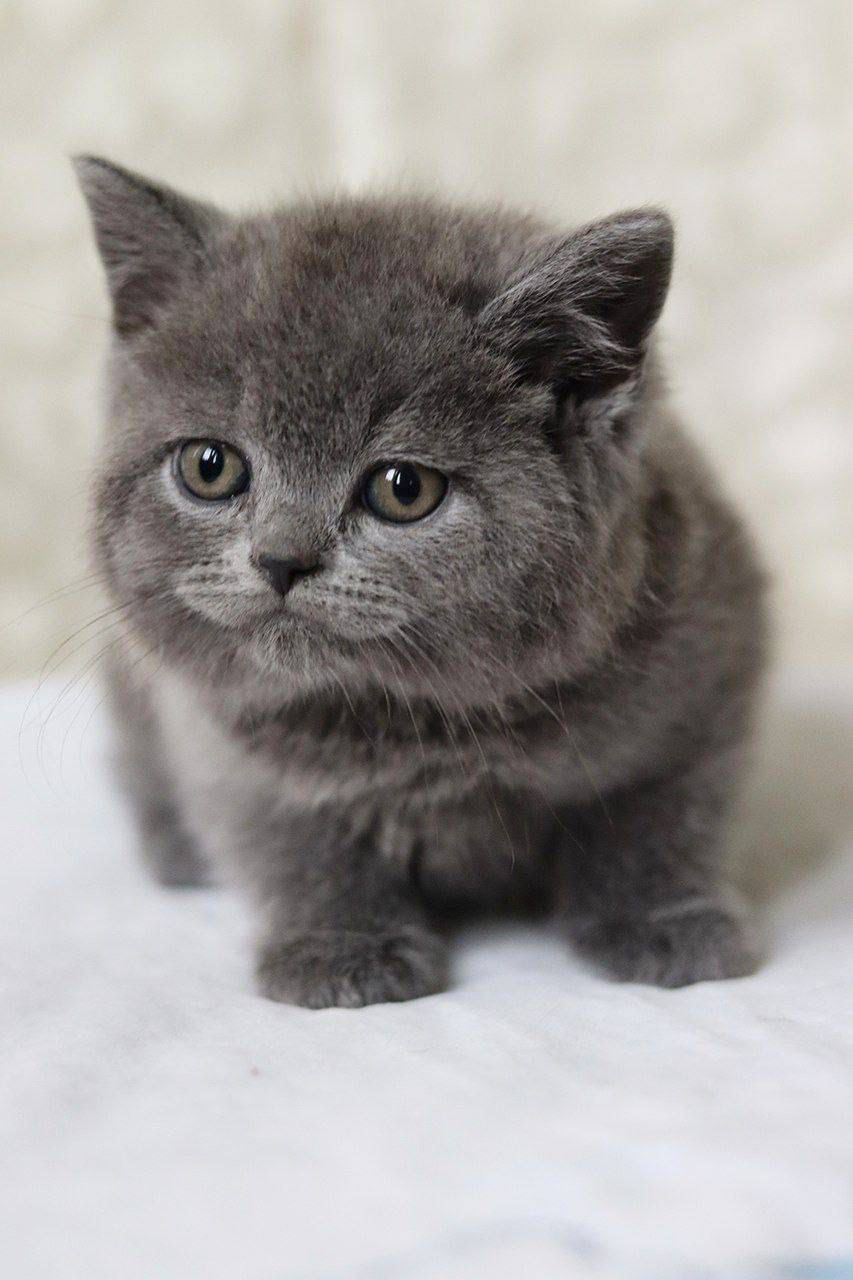
The iconic slate-gray BSH known simply as the “British Blue.” Copper eyes. By far the most recognized color and the highest-demand color in the United States. Roughly 40 percent of BSH kittens produced worldwide are blue.
Black
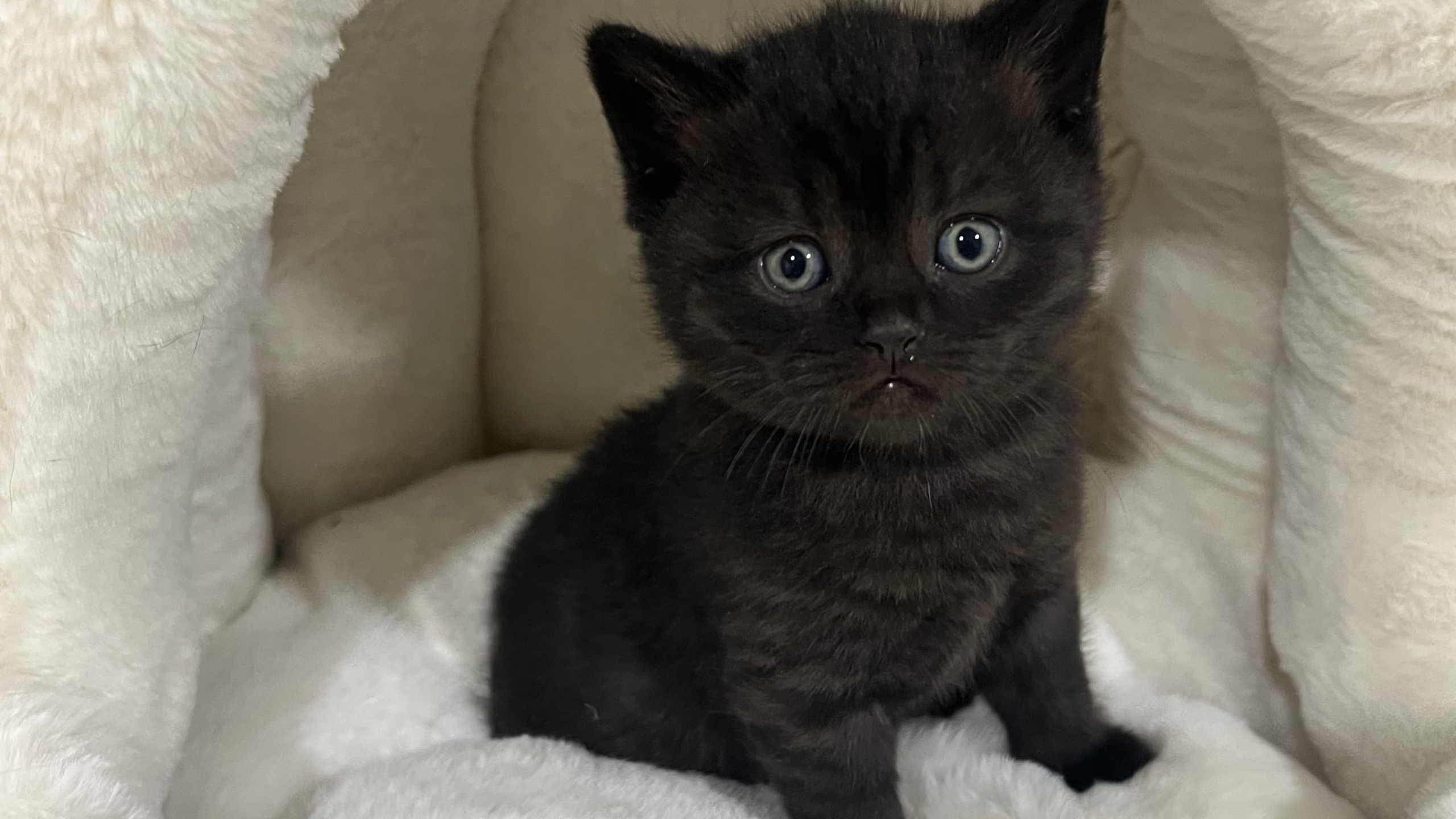
Dense jet black from root to tip, no rust or browning. Copper eyes. Uncommon in Western breeder pipelines; more common in Russian and Ukrainian bloodlines.
White
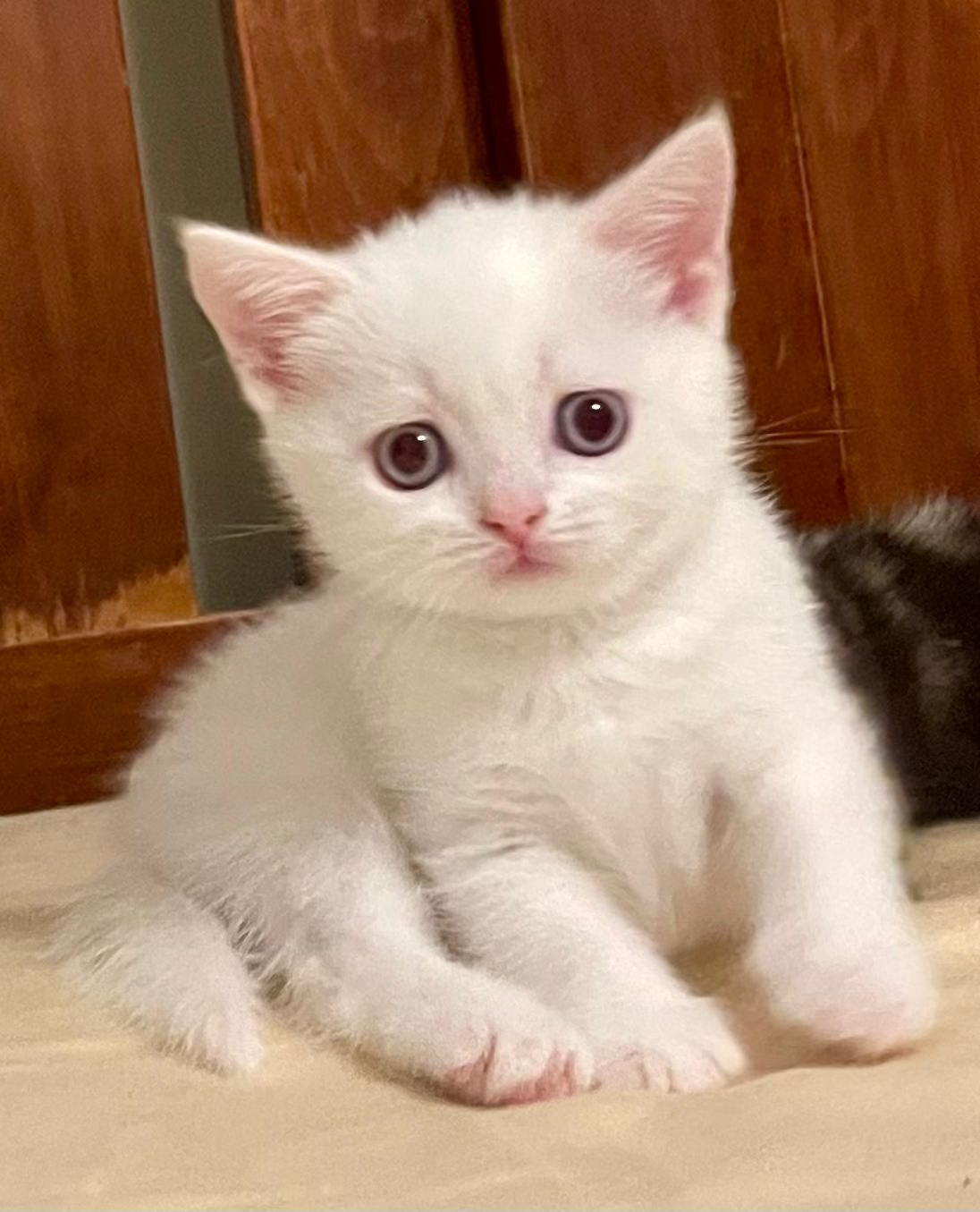
Pure snow-white coat. Eye color varies: copper, blue, or “odd-eyed” (one of each). White BSH kittens require deafness screening (BAER test) as blue-eyed whites have a higher congenital deafness risk.
Cream
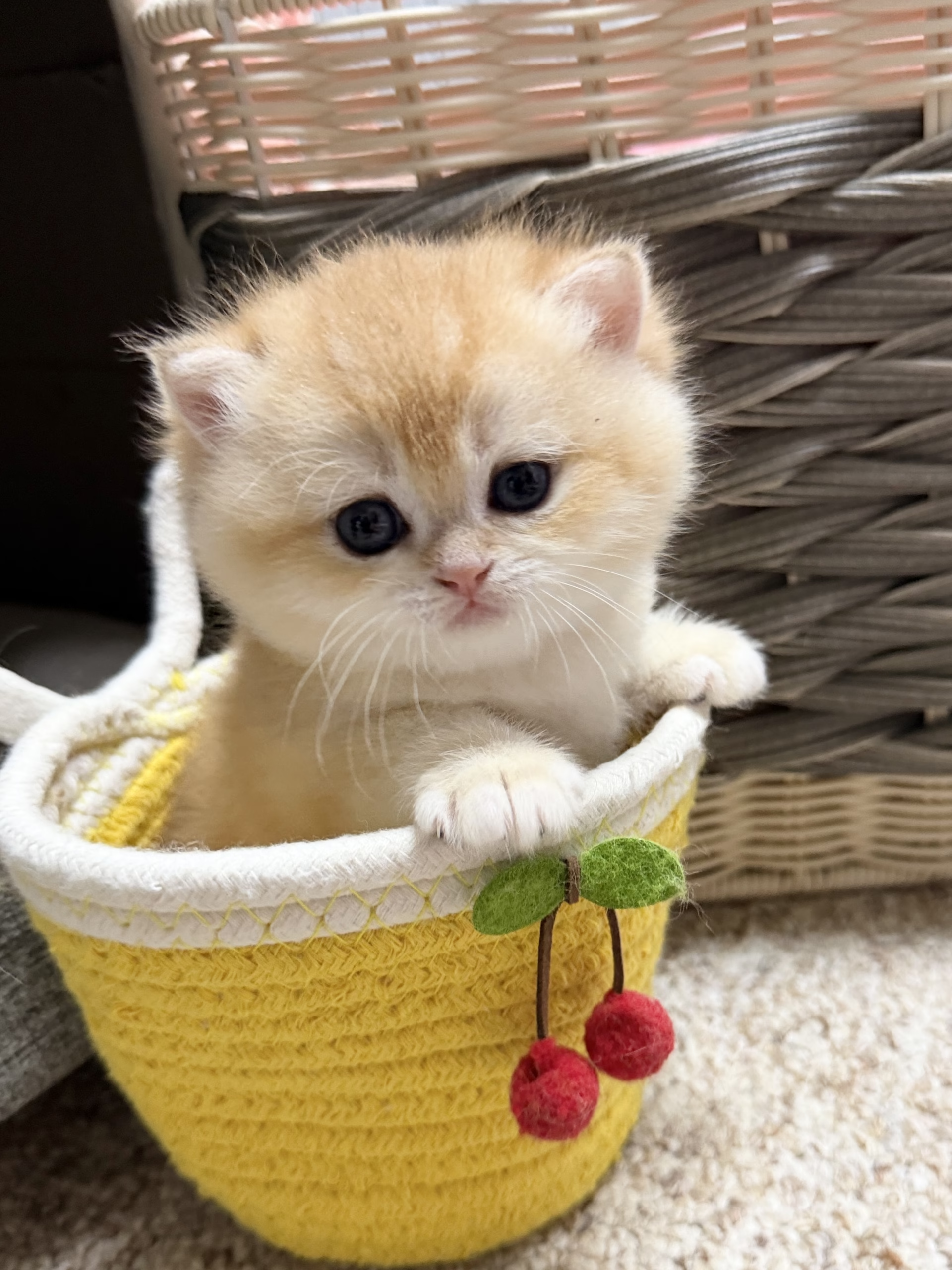
Warm buttery cream color, uniform across the coat. Copper eyes. Considered a “diluted” red gene expression. Moderately rare.
Red
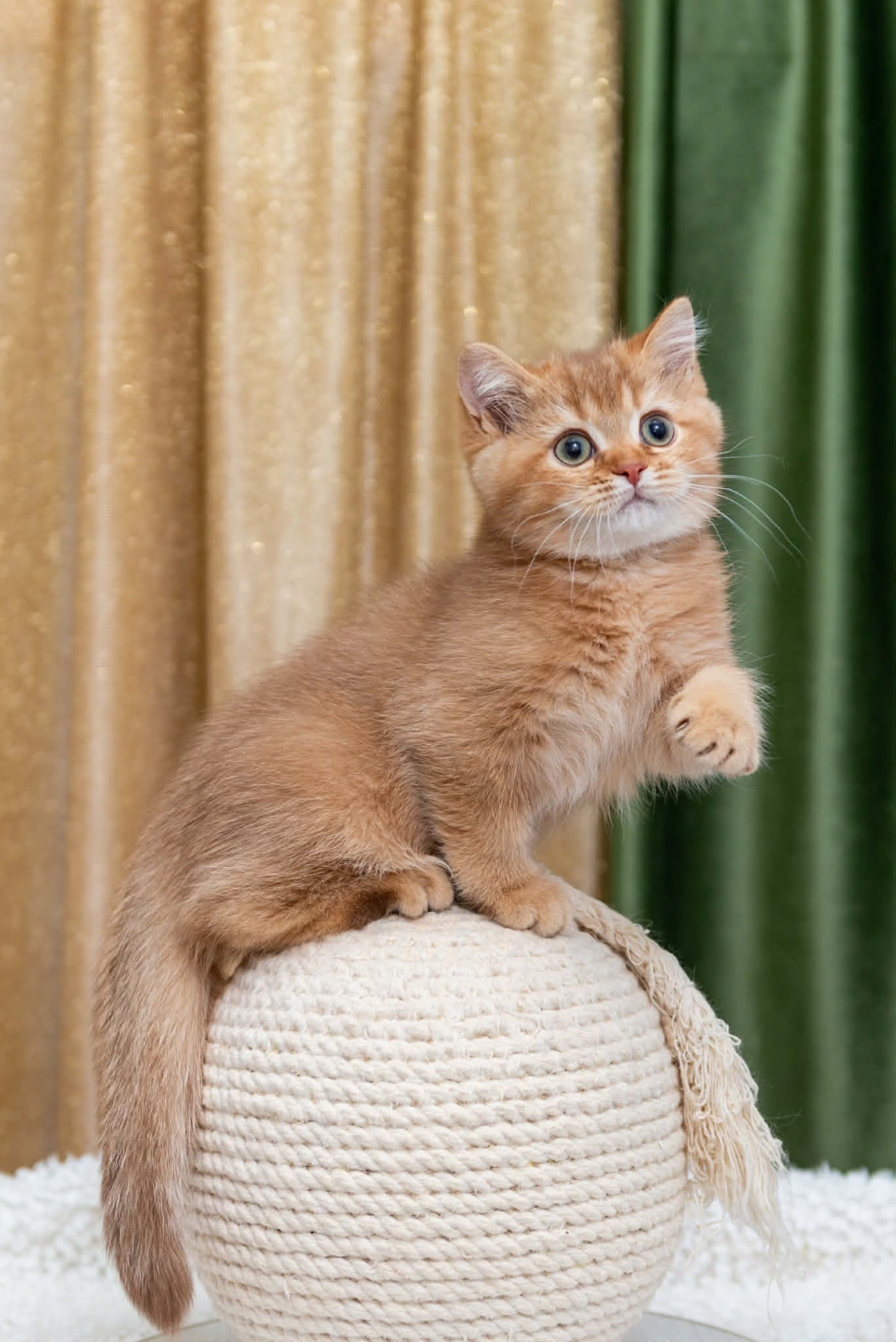
True warm orange-red, sometimes called “flame.” Copper eyes. Rare in BSH lines; more common in Persian and Maine Coon breeds. Pedigreed reds command a premium.
Lilac
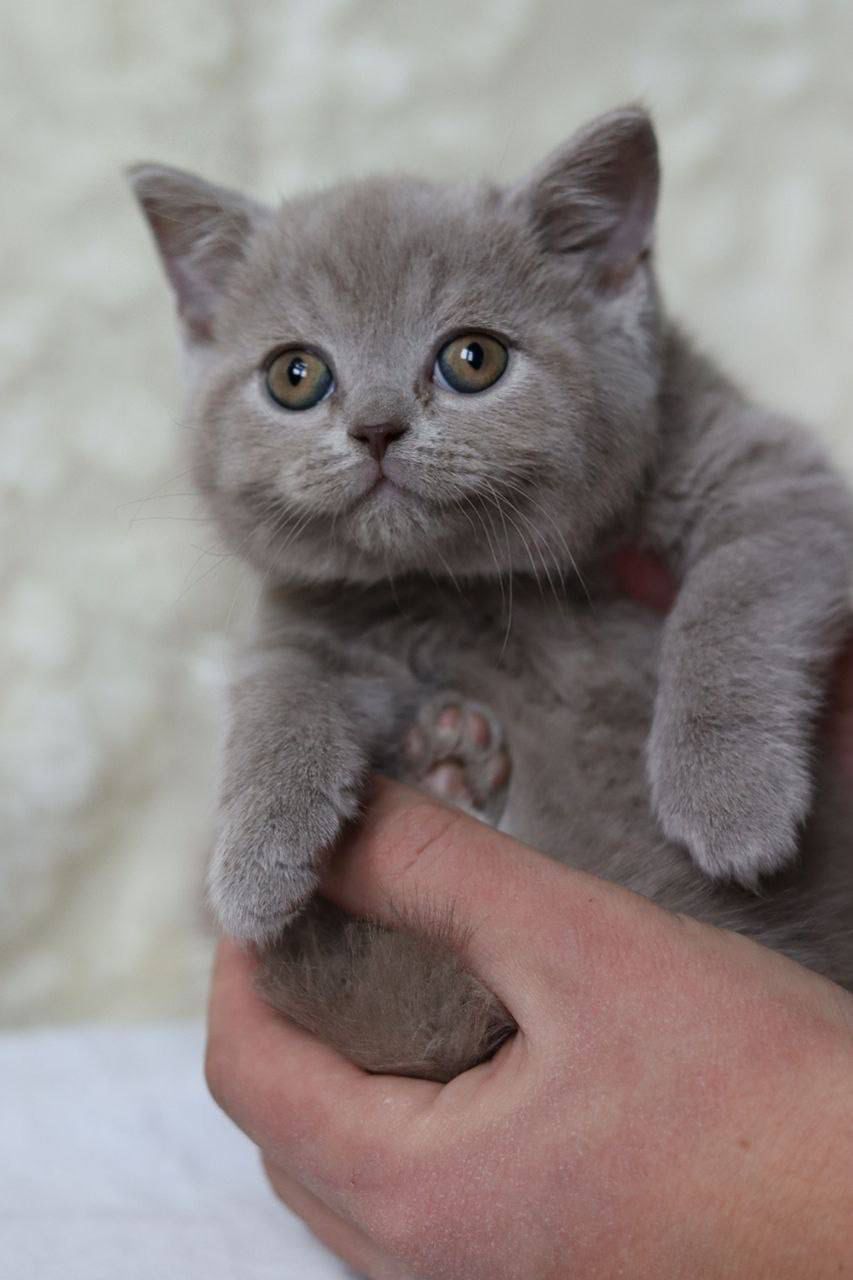
A pale pinkish-gray, often described as “warm dove.” Copper eyes. A diluted chocolate color. Highly sought after, moderately rare, and prices reflect it.
Chocolate
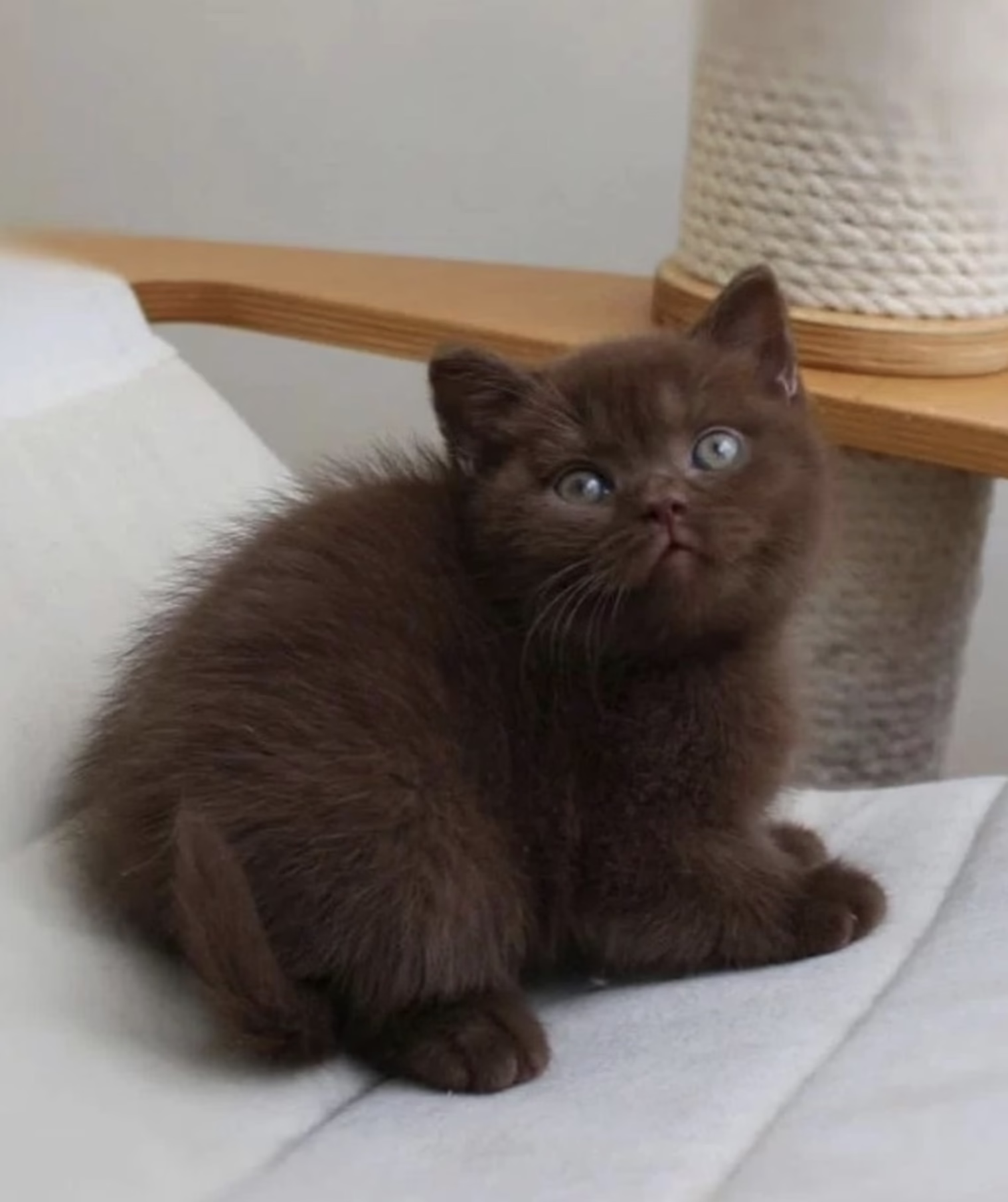
Rich milk-chocolate brown, uniform across the coat. Copper eyes. Rare in the US market; considered a prestige color.
Cinnamon and Fawn
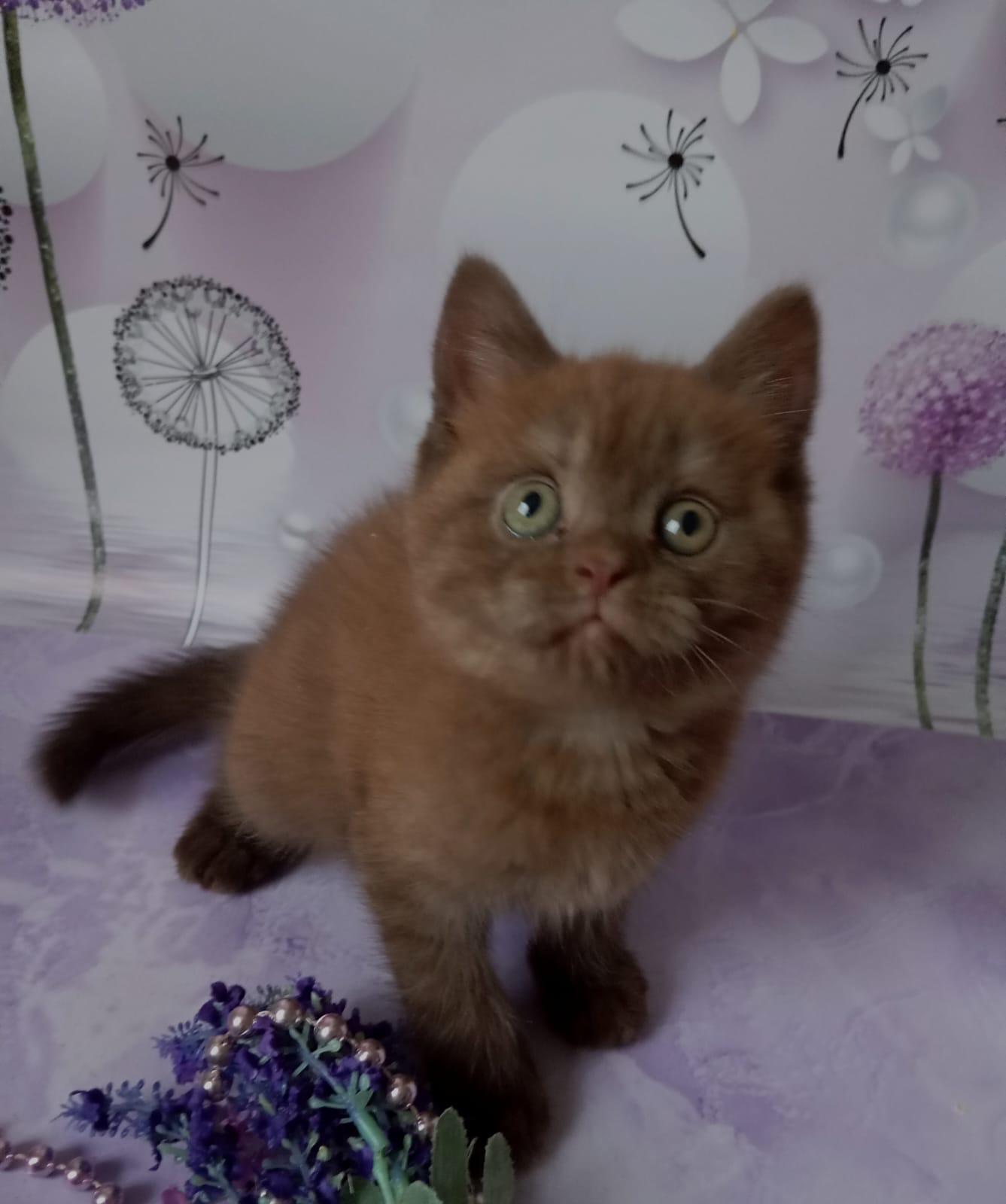
Cinnamon is a warm reddish-brown; fawn is its diluted pale version. Both are very rare in BSH; you may wait 12 to 24 months on a breeder’s list to secure one.
Blue vs. Lilac: How to Tell Them Apart
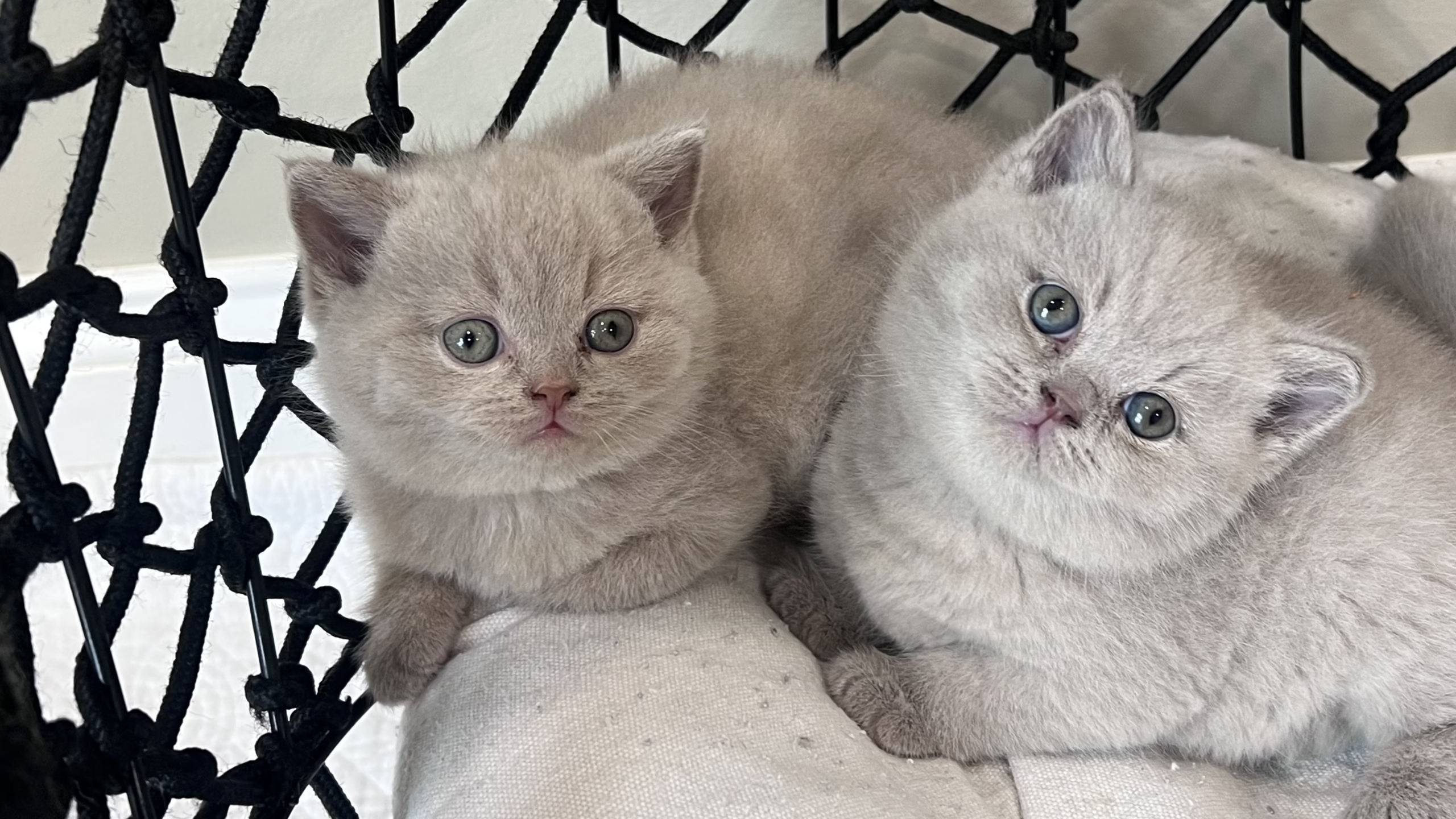
This is the #1 question BSH buyers ask. Blue is cool-toned slate gray. Lilac is warm-toned pinkish gray. Side by side, lilac looks distinctly “warmer” and paler. In lower light, they can be confused, but genetics tell the story: lilac is homozygous for the dilution gene plus the chocolate gene.
2. Tabby Patterns

The tabby gene shows in stripes, spots, or swirls layered over a base solid color. All BSH tabbies have the classic “M” marking on the forehead.
Classic Tabby
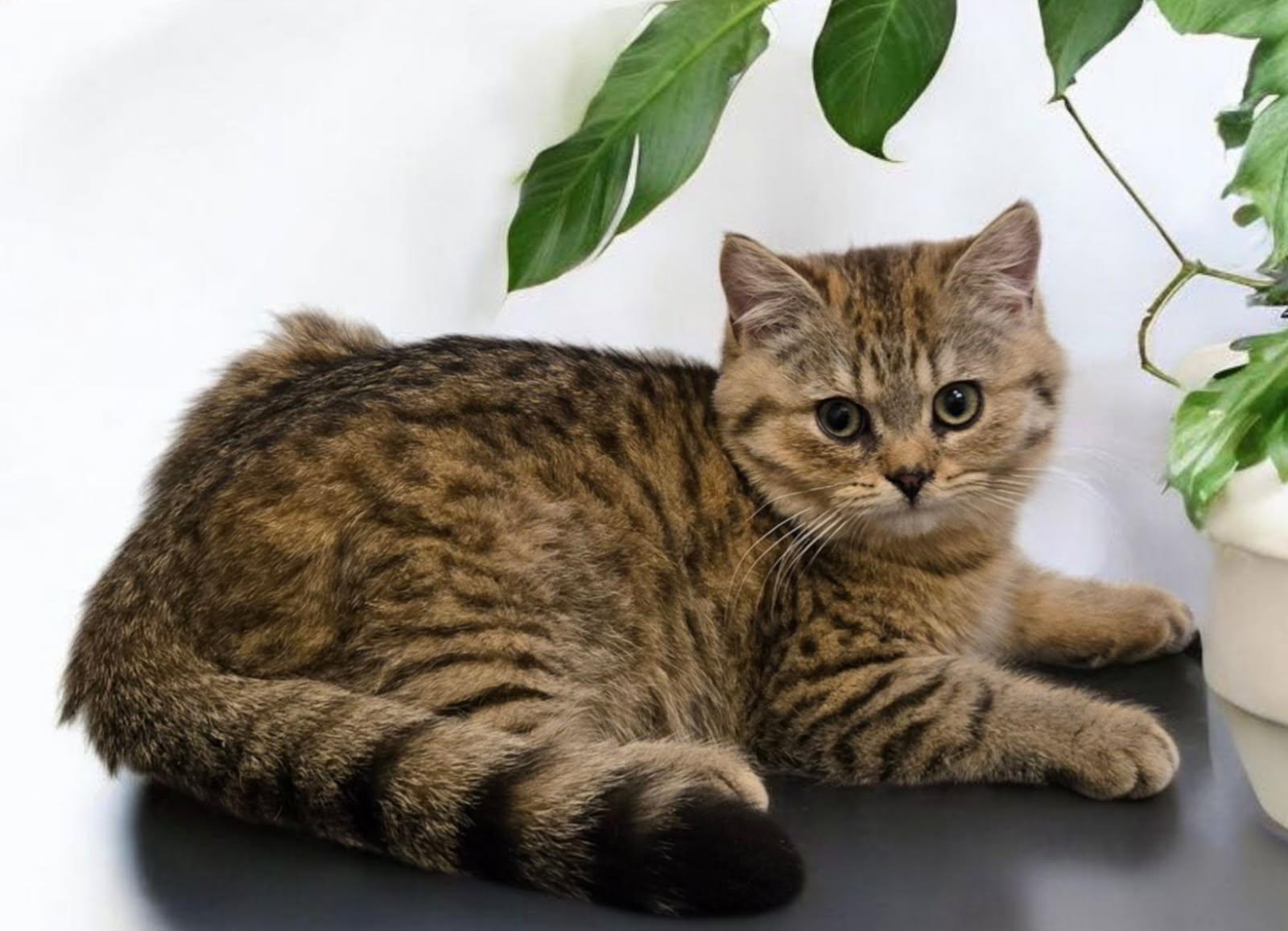
Bold swirling “bullseye” pattern on the sides. The most traditional tabby look.
Mackerel Tabby
Narrow parallel stripes running down the body, like a fish skeleton pattern.
Spotted Tabby
Distinct spots instead of stripes. Uncommon in BSH; sometimes indicates outcross ancestry.
Ticked Tabby
No visible stripes on the body, but tabby markings on face, legs, and tail. Each hair has multiple color bands.
Common BSH tabby colors include brown tabby (warm brown with dark stripes), blue tabby, silver tabby (silver base with black markings), and red tabby.
3. Bicolor
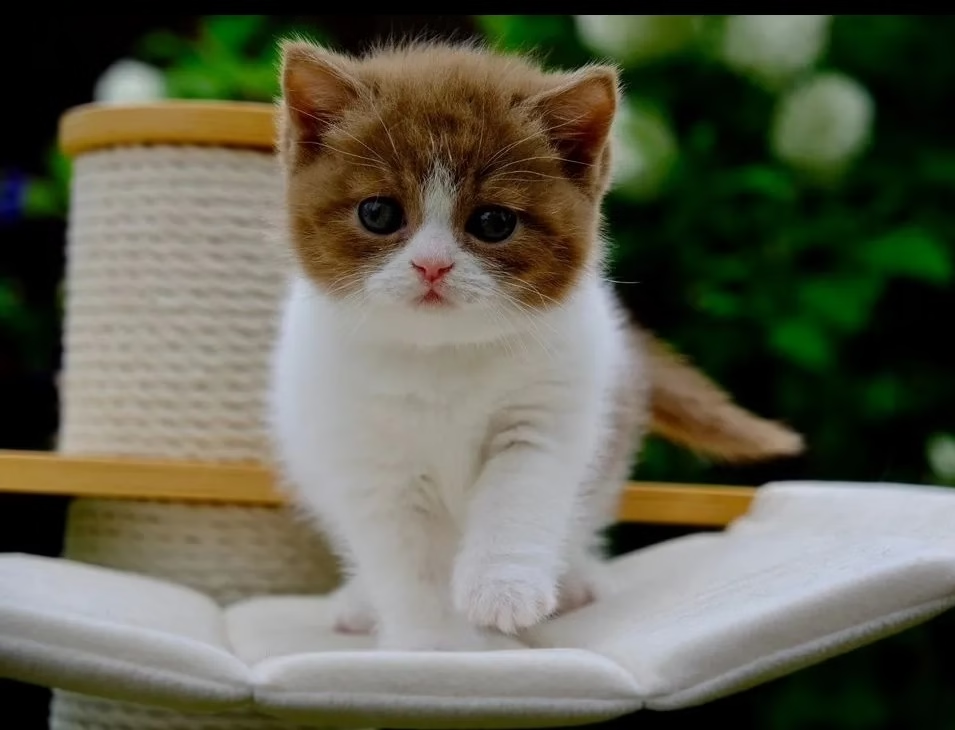
Bicolor BSH cats have any solid or tabby color combined with white. Three subtypes:
- Van pattern – mostly white with color only on head and tail (rare)
- Harlequin – mostly white with color patches (~50 percent white)
- Standard bicolor – up to two-thirds color, remainder white
Blue bicolor is popular. Rare bicolor combinations like chocolate bicolor or lilac bicolor command premium pricing.
4. Colorpoint (British Shorthair Point)
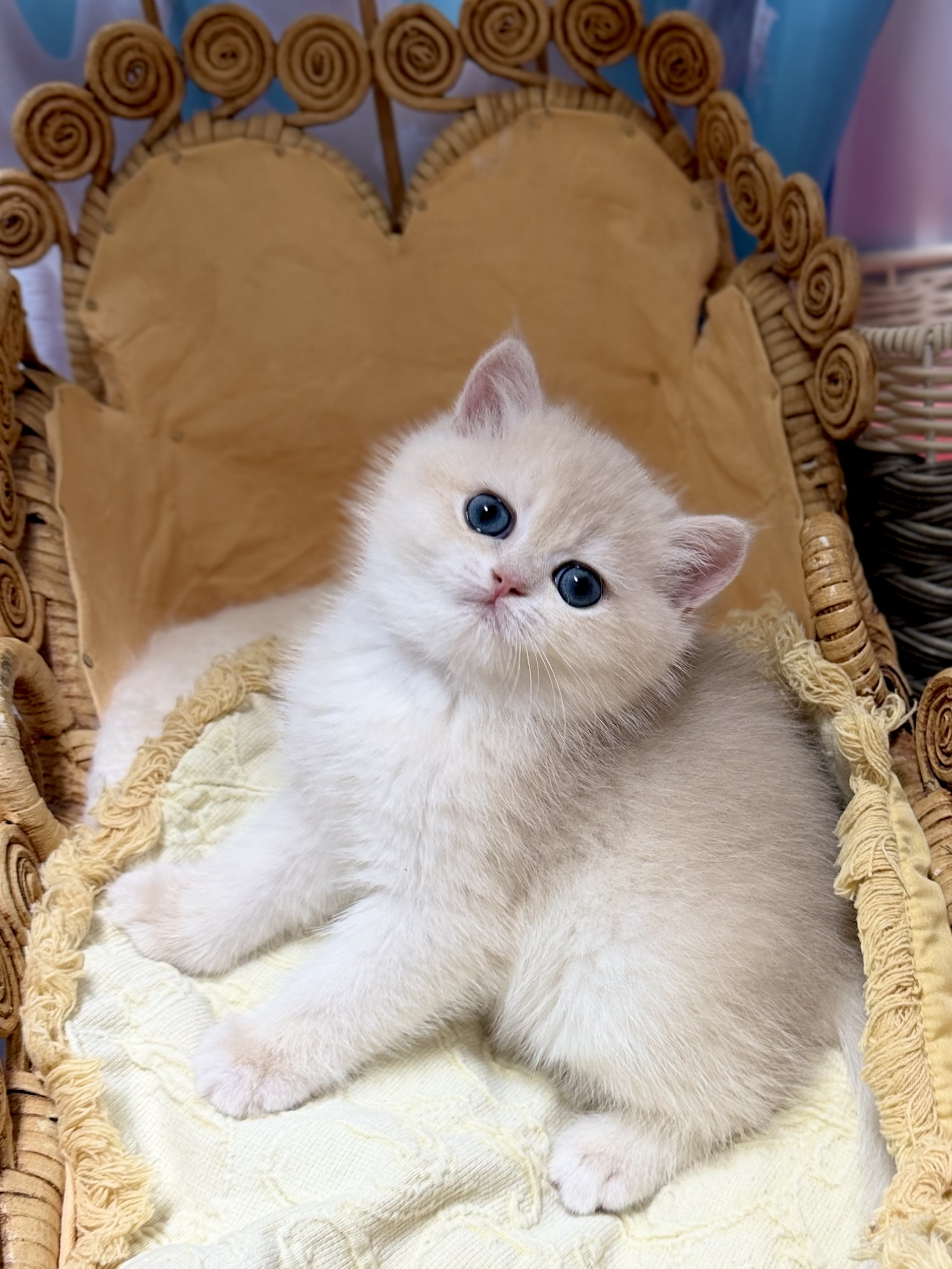
Colorpoint BSH have a light body with darker “points” on ears, face mask, paws, and tail – similar to Siamese and Ragdolls but in the BSH body type. Eye color is always blue in colorpoints.
Common point colors:
- Seal point – dark brown/black points on cream body
- Blue point – gray-blue points on off-white body
- Chocolate point – milk-chocolate points on cream body
- Lilac point – pale pinkish-gray points on white body
- Red point – orange points on cream body
Colorpoint BSH became TICA-recognized as a variety in the 2010s and are highly sought-after in the US market. Expect to pay 20 to 40 percent above solid BSH prices.
5. Tipped, Shaded, and Smoke Coats
These patterns feature a white or golden undercoat with darker color at the tips of each hair, creating a distinctive “shimmer” effect in the light.
Silver Shaded / Silver Tipped
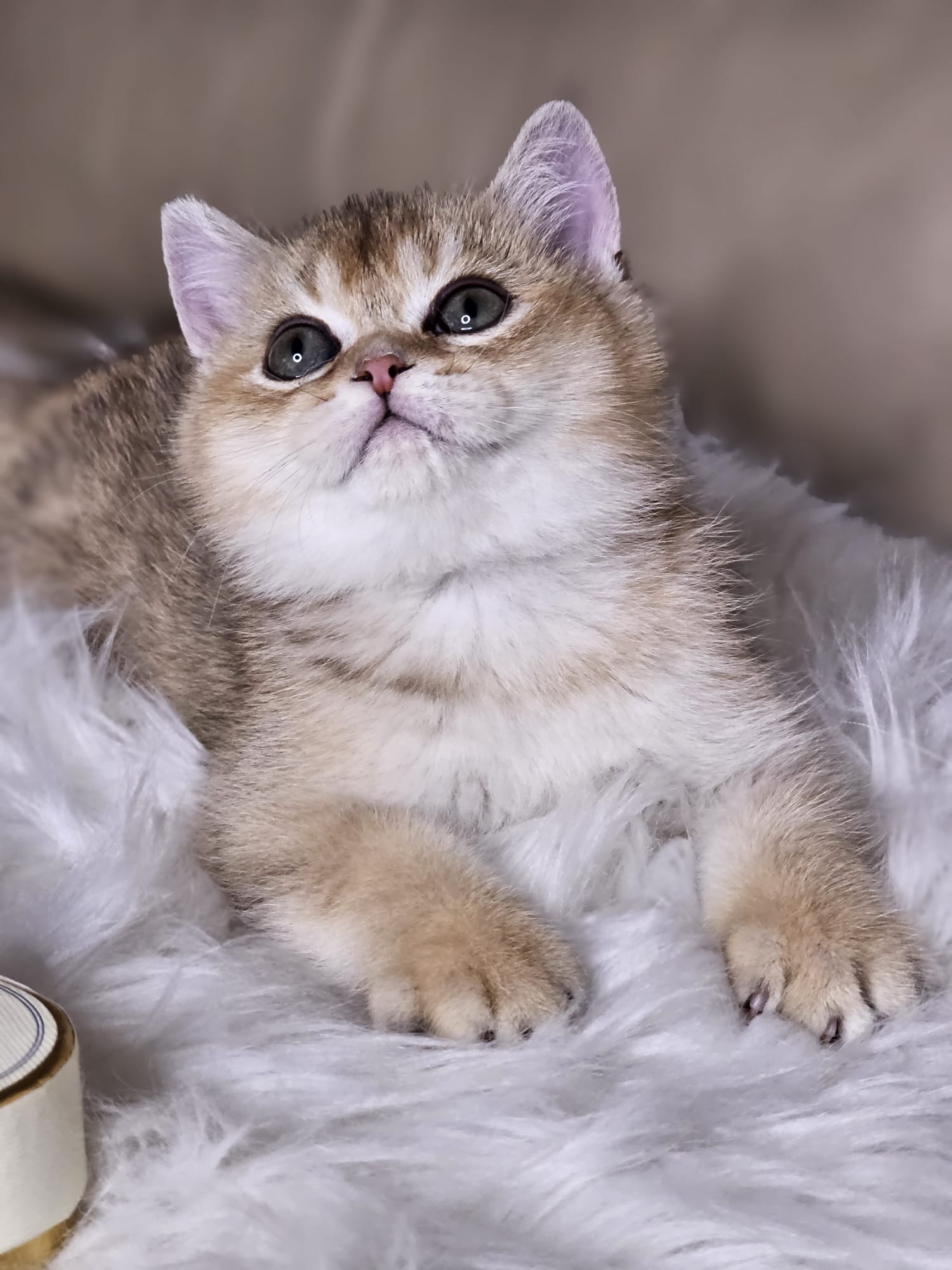
White undercoat, black tips. In shaded, tipping goes 1/3 to 1/2 down the hair. In tipped (“chinchilla”), tipping is only at the extreme tip. Green or blue-green eyes with black eyeliner. Very high demand.
Golden Shaded / Golden Tipped
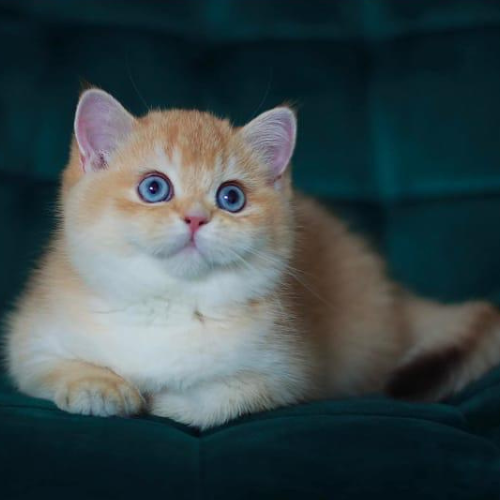
Warm golden apricot undercoat with darker brown tips. Green eyes with dark eyeliner. Extremely rare and expensive; typically 2x to 3x standard BSH prices.
Smoke
Longer color tipping down about 3/4 of each hair, revealing the white undercoat only when the cat moves. Black smoke and blue smoke are the most common.
6. Tortoiseshell and Calico
Tortoiseshell (Tortie)
A patched or blended mix of black and red (or dilute: blue and cream). Torties are almost always female due to sex-linked color genetics. Blue tortie (blue and cream) is popular in BSH lines.
Calico
Tortoiseshell pattern combined with white patches. Also nearly always female. In BSH, calicos are less common than in domestic cats.
Rarity and Pricing Impact
Approximate rarity ranking in US-available BSH kittens (most common to rarest):
- Blue solid – most common, base price
- Silver tabby, brown tabby – common, standard pricing
- Bicolor variants – moderate rarity, +10 to 20% pricing
- Colorpoint, tortoiseshell – moderate rarity, +20 to 30% pricing
- Lilac, cream, red solid – rare, +30 to 50% pricing
- Chocolate, cinnamon, fawn – very rare, often +50 to 100% pricing
- Golden shaded, silver shaded – highly rare, often +100 to 150% pricing
A standard blue BSH kitten at $2,000 to $2,800 becomes a lilac BSH at $2,800 to $3,800 and a golden shaded BSH at $4,500 to $6,000+.
Eye Color Genetics
BSH eye color follows the coat color genetically:
- Copper / gold – solid, tabby, bicolor, tortoiseshell
- Blue – colorpoint, some whites
- Green – silver shaded, silver tipped, golden shaded, some tabbies
- Odd-eyed – some whites (one copper, one blue)
If a “breeder” tries to sell you a “green-eyed British Blue,” that is a genetic red flag. The color combination is essentially not possible in a purebred BSH.
Which Color Is Right for You?
There is no “best” BSH color. All BSH cats share the same famously calm, teddy-bear temperament regardless of color. Practical considerations:
- Fastest availability: blue, silver tabby, brown tabby
- Best “wow factor”: golden shaded, colorpoint, silver tipped
- Best value: blue (proven color, standard pricing, quickest waitlist)
- Best long-term investment: chocolate, lilac, or golden (rare colors hold value)
British Longhair: Same Colors, Longer Coat
Every color and pattern above also appears in the British Longhair (BLH), which shares BSH genetics with a longer coat mutation. If you love the BSH temperament but want more fluff, browse available British Longhair kittens or see the British Longhair breed guide.
British Shorthairs at Luxury Only Kittens
Luxury Only Kittens works with a curated network of ethical British Shorthair breeders across the United States, and different color varieties come from different origin breeders. Whether you want a classic British Blue, a rare lilac, a colorpoint, or a silver or golden shaded kitten, we can help match your preference with available litters. Every kitten we place is health-tested, hand-raised, and delivered with a written health guarantee. Registration papers and full lineage details vary by origin breeder and are shared with you before purchase. Pricing typically starts around $2,000 for standard colors and reflects the rarity ranking above for premium colors.
Above all, we focus on the match: we care that your family receives a healthy, well-socialized kitten, and equally that every kitten joins a home committed to caring for it for life.
Browse currently available British Shorthair kittens or see full breed details.
Frequently Asked Questions
What is the rarest British Shorthair color?
Cinnamon and fawn are the two rarest recognized colors. Golden shaded is also very rare and highly sought. Any of these will typically require joining a breeder’s waitlist for 12 months or more.
What is the difference between British Blue and British Shorthair?
“British Blue” is not a separate breed. It is the blue color variety of the British Shorthair breed. All British Blues are British Shorthairs; not all British Shorthairs are blue.
Are colorpoint British Shorthairs purebred?
Yes, colorpoint BSH are recognized as a variety of the breed by TICA. The colorpoint gene was introduced through historical outcrosses and is now stabilized in the breed.
Do British Shorthair colors affect personality?
No. Coat color is genetically independent of temperament. Every BSH color shares the breed’s famously calm, dog-like personality.
Which BSH color changes with age?
Silver shaded, golden shaded, and colorpoints often develop more pronounced coloring by age 2. Kitten photos may not reflect the adult color, so ask breeders for adult photos from prior litters of the same lineage.
How much does a golden British Shorthair kitten cost?
$4,500 to $6,000+ from a reputable breeder. The color’s rarity and the difficulty of producing it (specific genetic pairings required) drives the premium.
Are lilac British Shorthairs healthy?
Yes. Lilac is a color dilution, not a health-linked mutation. Lilac BSH have the same health profile and lifespan as any other BSH color.